缔约国自评年度报告电子工具是一个基于网络的平台,旨在支持《国际卫生条例》缔约国履行其义务,每年向世界卫生大会(卫生大会)报告条例下能力要求的执行情况,并鼓励缔约国在世卫组织《国际卫生条例》监测和评价框架下加强透明度和相互问责以实现全球公共卫生安全。
查看包含以下信息的简短视频:什么是 SPAR?,如何在线使用 e-SPAR? , IHRMEF 或者您可以查看本手册。 以《国际卫生条例》国家归口单位或世卫组织《国际卫生条例》联络点身份登录, 点击下面的登录按钮。
The revised International Health Regulations (IHR 2005) are a set of legal instruments designed to ensure and improve the capacity of all signatories or States Parties to prevent, detect, assess, notify, and respond to public health risks and acute events. Under the IHR 2005, States Parties are obliged to develop and maintain minimum core capacities for surveillance and response to any potential public health events of international concern. The success of the IHR in ensuring global public health security depends on their full application, implementation, and compliance by all States Parties.
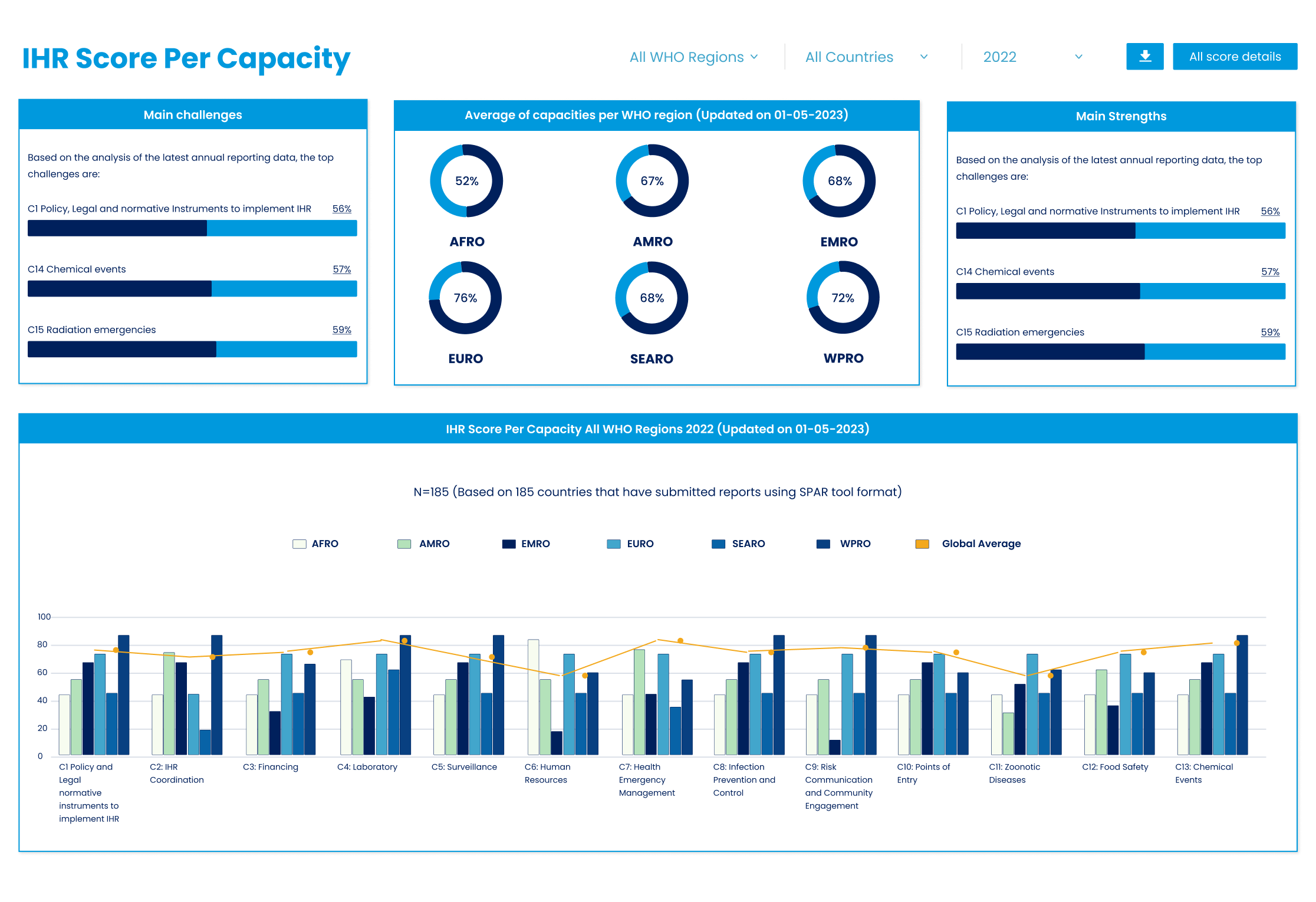
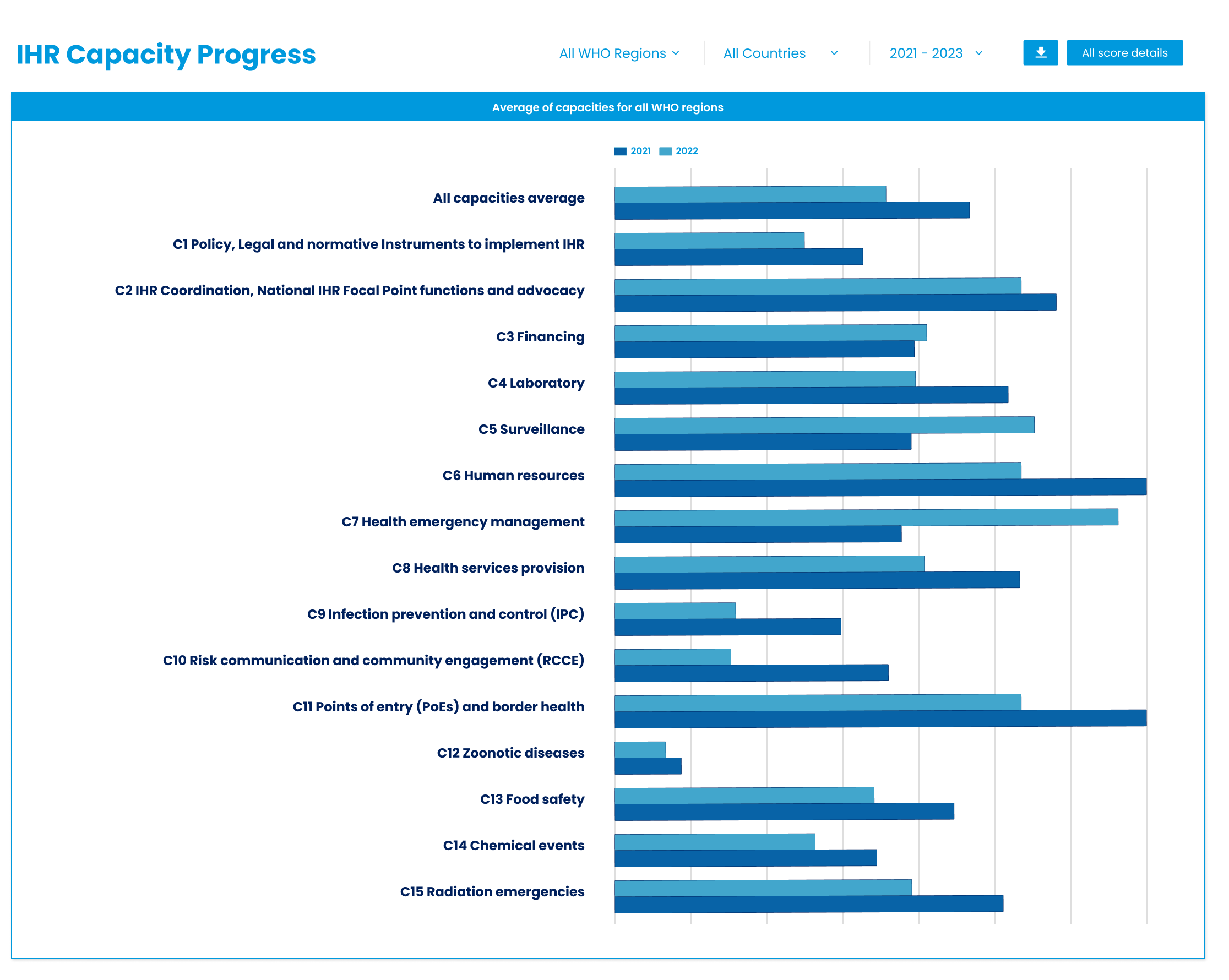
States Parties and the Director-General report to the World Health Assembly on the implementation of the IHR. States Parties use a self-assessment tool for their annual reporting called the IHR States Parties Self-Assessment Annual Reporting Tool or SPAR. The SPAR tool consists of 35 indicators for the 15 IHR capacities needed to detect, assess, notify, report and respond to public health risks and acute events of domestic and international concern. For each of the 15 capacities, one to three indicators are used to measure the status of each capacity. Indicators are further broken down into attributes, which further define the indicator at each level. SPAR questionnaire is launched every year after the World Health Assembly for States Parties to initiate the process of self-assessment and reporting to the World Health Assembly, using a multisectoral approach to obtain information from all sectors involved in implementing IHR core capacities.